
FLR6Y-A FEP Wire High-temperature Cable Automotive Wire Harness OEM Factory
FLR6Y-A FEP Wire High-temperature Cable Automotive Wire Harness OEM Factory
Item Number:FLR6Y-A
Categories
None
Description
Product Overview
The FLR6Y-A is a premium high-performance, thin-wall automotive wire engineered for harsh environments. According to automotive cable nomenclature, "FL" stands for automotive wire, "R" indicates a reduced/thin wall (saving space and weight), "6Y" represents FEP (Fluorinated Ethylene Propylene) insulation, and "A" specifies a Type A conductor (symmetrical strand structure).
With the exceptional properties of FEP material, the FLR6Y-A wire operates reliably in extreme temperatures ranging from -40°C to +210°C. It offers outstanding resistance to mechanical abrasion, engine oils, and harsh automotive chemicals, making it the ideal wiring solution for modern lightweight vehicles and the high-temperature zones of Electric Vehicles (EVs).
Typical Applications
- Engine compartment wiring harnesses
- Automotive sensor connections (e.g., Oxygen sensors, Temperature sensors)
- Transmission and chassis control systems
- High-temperature signal and control wires in Electric/Hybrid Vehicles (EV/HEV)
- Headlamp and high-temperature lighting system wiring
Basic Data
- Reference Standards: ISO 6722-1 / DIN 72551-6
- Conductor Material: Bare Copper or Tinned Copper (Compliant with ASTM B3 / B33)
- Conductor Structure: Type A (Symmetrical stranding)
- Insulation Material: FEP (Fluorinated Ethylene Propylene / 6Y)
- Temperature Range: -40°C to +210°C (Class F)
- Nominal Voltage: 60V DC / 25V AC
- Flame Retardance: Self-extinguishing
- Environmental Compliance: RoHS & REACH compliant
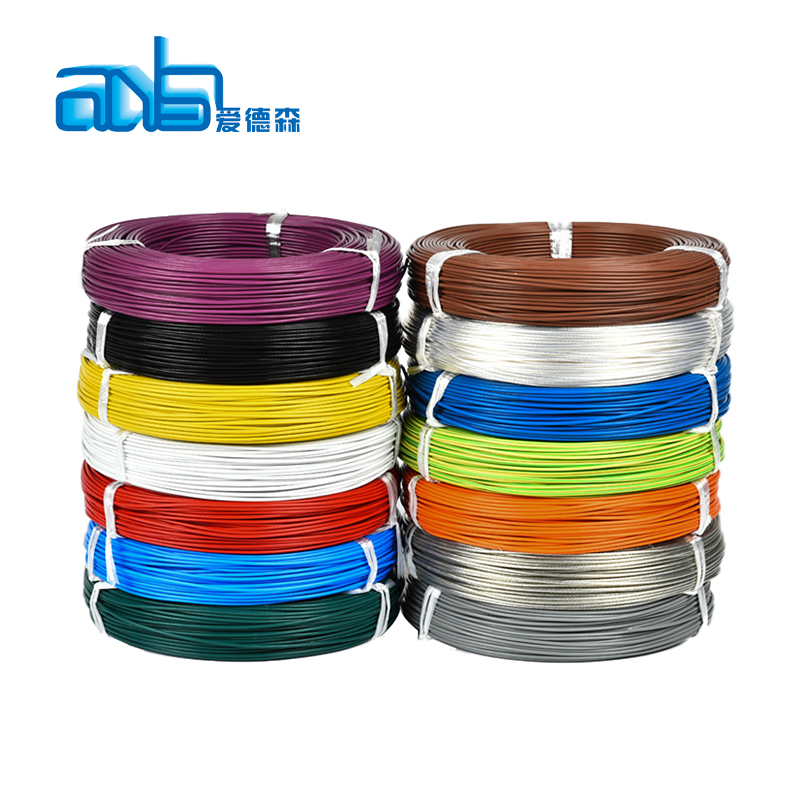
- Available Colors: Black, Red, Blue, Yellow, Green, Brown, White, Grey, etc. (Bi-colors/Stripes available upon request).
Dimension & Specification Table
| Nominal Cross-Section (mm²) | Conductor Construction (No./Diam. mm) | Max. Conductor Dia. (mm) | Nom. Insulation Thickness (mm) | Max. Cable Dia. (mm) | Max. Conductor Resistance at 20℃ (Bare / Tinned) (Ω/km) |
| 0.13 | 7 / 0.16 | 0.5 | 0.2 | 1.05 | 136.0 / 140.0 |
| 0.22 | 7 / 0.20 | 0.65 | 0.2 | 1.2 | 84.8 / 86.5 |
| 0.35 | 7 / 0.26 | 0.8 | 0.2 | 1.3 | 54.4 / 55.5 |
| 0.5 | 19 / 0.19 | 1 | 0.22 | 1.6 | 37.1 / 38.2 |
| 0.75 | 19 / 0.23 | 1.2 | 0.24 | 1.9 | 24.7 / 25.4 |
| 1 | 19 / 0.26 | 1.35 | 0.24 | 2.1 | 18.5 / 19.1 |
| 1.5 | 19 / 0.32 | 1.7 | 0.24 | 2.4 | 12.7 / 13.0 |
| 2 | 19 / 0.37 | 2 | 0.28 | 2.8 | 9.42 / 9.69 |
| 2.5 | 19 / 0.41 | 2.2 | 0.28 | 3 | 7.60 / 7.82 |
(Note: The data above is for reference only. Actual specifications are subject to our final datasheet. Custom sizes and OEM/ODM services are available.)
Frequently Asked Questions (FAQ)
Q1: What is the difference between FLR6Y-A and FLR6Y-B? A: Both are FEP-insulated thin-wall automotive wires. The difference lies in the conductor stranding. Type A uses fewer, thicker copper strands, making the wire slightly more rigid. Type B uses more, finer copper strands, offering higher flexibility, which is ideal for routing through tight spaces with frequent bending.
Q2: Why choose FEP (6Y) over standard PVC (11Y)? A: FEP insulation boasts a significantly higher temperature rating (210°C) compared to standard PVC (typically 105°C). In high-heat areas like engine bays, FEP will not melt, crack, or age quickly, providing superior safety, chemical resistance, and a longer lifespan.