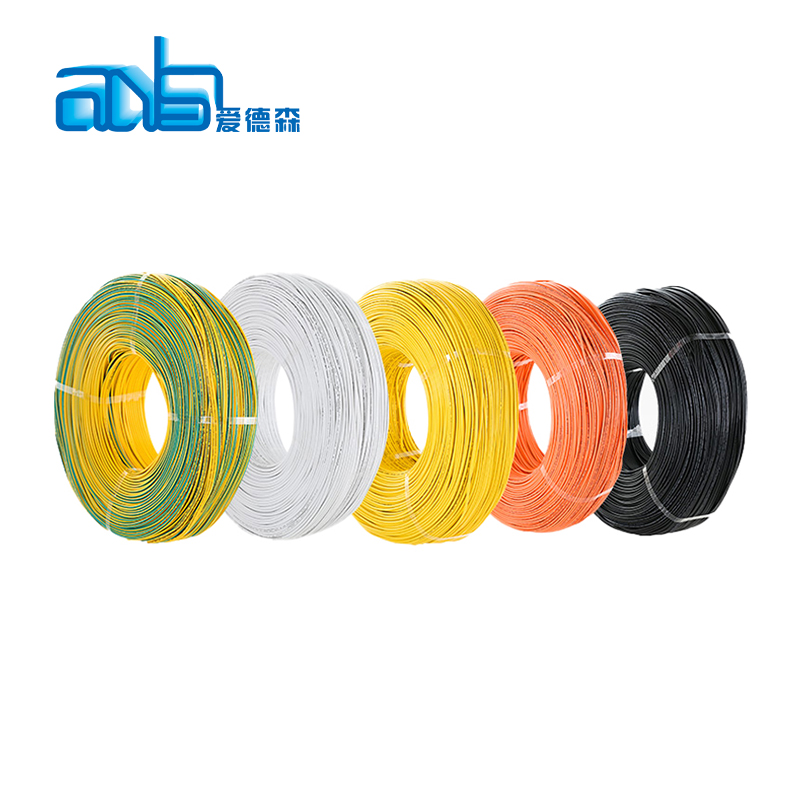
UL10588 Teflon Wire: The Preferred Special Cable for High-temperature Environments
UL10588 Teflon wire, as a special cable certified by the American standard, uses FEP (fluorinated ethylene propylene copolymer) as the insulating material, combined with solid core or stranded tin-plated copper wires as the conductors. With its outstanding comprehensive performance, it becomes an ideal connection solution for harsh environments such as high temperatures and corrosion, and is widely used in multiple high-end manufacturing fields.
Core Product Performance
• Wide temperature adaptability: The rated operating temperature range covers -65 to +200℃, enabling stable operation in extremely high and low temperature environments, without being affected by drastic temperature fluctuations.
• Outstanding protective features: The insulation layer has strong corrosion resistance and can withstand the erosion of oil, strong acids, strong alkalis and strong oxidants. At the same time, it possesses excellent fire resistance and aging resistance, and has a long service life.
• Excellent electrical performance: Rated voltage 300V, low high-frequency loss, non-hygroscopic and high insulation resistance, which can ensure the stability and reliability of power and signal transmission.
• Flexible specification selection: The wire diameter ranges from AWG 10 to over 30 different specifications. The conductor structure supports single-strand or multi-strand twisted design. The outer diameter ranges from 0.71 to 3.47mm. The color options include red, yellow, blue, black, and many others, suitable for various installation scenarios.
The performance advantages of UL10588 Teflon wire make it indispensable in various fields:
• In the electronic and electrical field: Suitable for temperature compensation wires, high-temperature heating wires, flame-retardant cables, as well as internal wiring for micro motors, programmable devices, and precision instruments and meters. It is a key connection component for 5G communication equipment and data centers.
• Automotive and New Energy Field: Focus on key components such as battery management systems, motor controllers, and on-board charging equipment for new energy vehicles, to meet the requirements of high-temperature and oil-resistant usage in vehicles.
• Aerospace and industrial fields: Serving aerospace equipment, metallurgical and petroleum equipment, industrial automation production lines, and intelligent manufacturing equipment. It is suitable for harsh working conditions such as high temperatures, corrosion, and high vibration.
• In the medical equipment field: Due to its physiological inertness and stability, it is applied to the internal wiring of high-end medical imaging equipment, surgical robots, and in vitro diagnostic devices, etc., which are precision medical instruments.
Market Analysis
• Steady growth in market size: The global fluororubber wire market has a compound annual growth rate of 8.9% and is expected to reach 1.87 billion US dollars by 2026. Among them, the 200°C temperature-resistant products under UL10588 account for a significant share and the demand is continuously increasing.
• Regional demand concentration: The Asia-Pacific region is the core growth engine. The Chinese market contributes 31.8% to the total, and its scale is expected to reach 590 million US dollars in 2026. The eastern and southern regions are the main production centers, and the process of domestic substitution is advancing steadily.
• Demand drivers: The upgrade of 5G communication technology, the popularization of new energy vehicles, the development of the aerospace industry, and the precisionization of medical equipment have become the core driving forces behind the growth in demand for high-performance cables such as UL10588. Among them, the demand in the new energy vehicle sector has an annual growth rate of over 25%.
• Diverse competitive landscape: The market is characterized by foreign enterprises dominating the high-end market while domestic enterprises are rapidly emerging. The technological breakthroughs of domestic enterprises in high-temperature resistance and ultra-high frequency transmission products are gradually enhancing their market competitiveness.